Why Your First Sample Ran Small: Ease, Pattern Making and Production Samples
By Egoyibo Okoro · August 2026
When the first samples of our house's first collection came back from the factory, the hoodies fit perfectly. Most of the denim ran a size small. Same factory, same round, and the factory had done its job with precision: each sample was true to the pack it was cut from. That split is exactly the lesson of this article.
One of the biggest misconceptions in fashion is that if the tech pack is accurate, the garment will fit. It does not work that way. A garment can match every number in its documentation and still run a size small, and the missing concept has a name: ease.
What ease actually is
Ease is the difference between a person's body measurements and the finished garment's measurements. Say your hips measure 100 cm. If your jeans also measure exactly 100 cm at the hip, they fit on paper. In reality, rigid denim does not expand around a body. You need room to move, sit, breathe and get dressed, and that room is ease.
How much ease a garment needs is not one number. A tailored blazer carries different ease from oversized trousers. Stretch denim needs less than rigid denim, and a fully interfaced waistband needs none of the stretch allowance its shell fabric might earn, because interfacing does not stretch even when the shell does. A corset runs the other way entirely: it carries negative ease, deliberately finishing smaller than the body it shapes. And where a waistband sits changes the arithmetic again, because body girth at a dropped waist is not body girth at the natural waist.
None of that is guesswork. It is pattern engineering.
What actually happened to our first samples
Our root cause was almost embarrassingly simple, and the round itself proved it, because the round was a controlled experiment we had not meant to run. The hoodie packs carried ease instructions to the manufacturer. The hoodies came back a perfect fit. The denim packs specified finished measurements at body dimensions, with no ease allowance, and most of the denim ran a size small.
The clearest example was the Combat Dungarees. To be precise about what "ran small" means: the samples fit, and fit beautifully. They just fit one size down from the size on their label. Rigid denim gives nothing back, so a piece specified at body dimensions simply becomes the next size down, and on top of the missing ease the fabric itself likely shrank, as rigid denim does. A knit stretches around that difference. Rigid denim reports it, centimetre for centimetre, and relabels the garment for you.
Not every denim piece told the same story. The Studded Denim Jacket came back with no size issues at all. The closer a piece sat to the body, the louder the missing allowance spoke, which is itself the lesson: ease is not one decision per collection, it is one decision per garment, per silhouette, per point of measure.
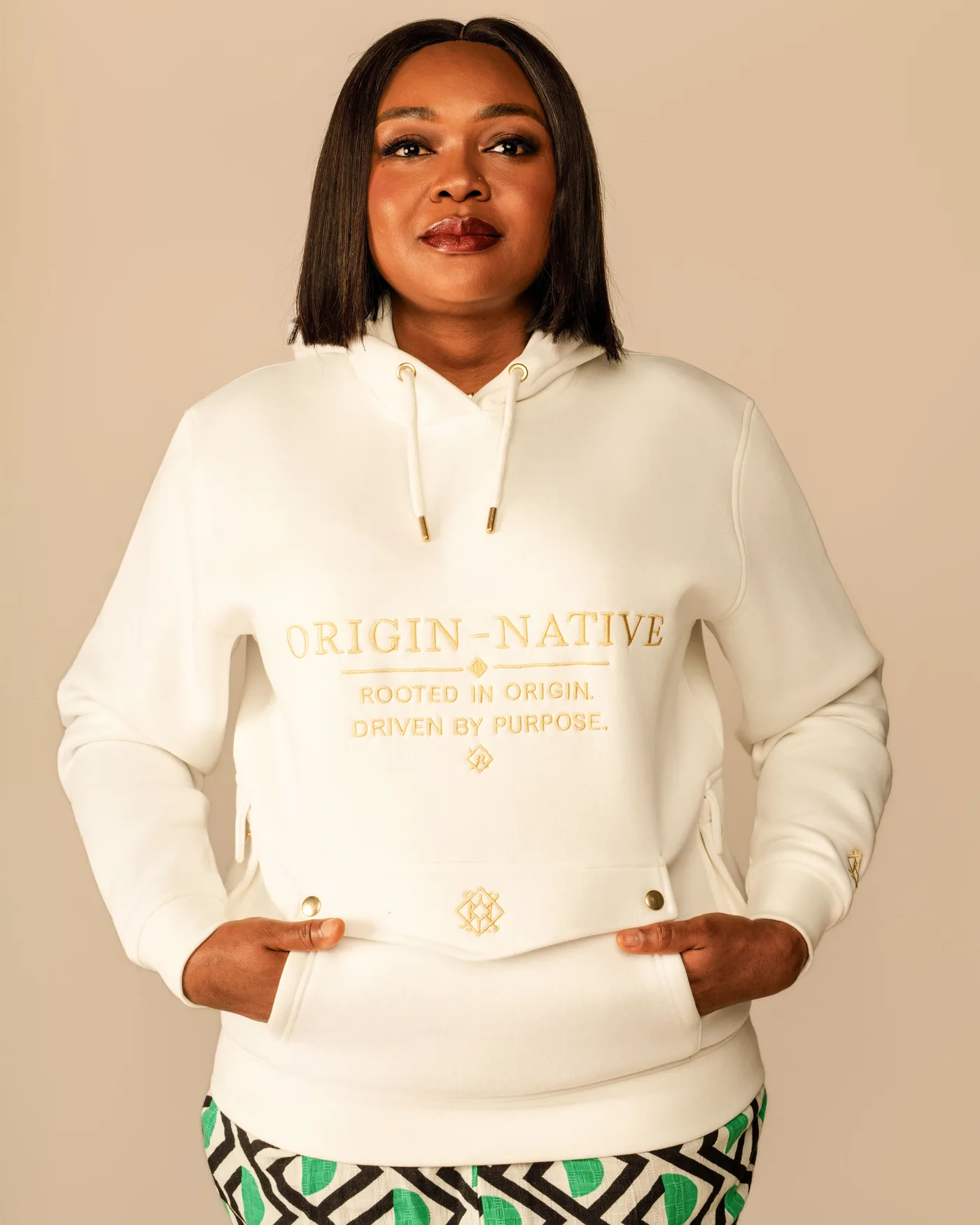
The factory manufactured exactly what each pack said, because factories manufacture what they receive. Where the documents carried ease, the garment fit its intended size. Where they did not, it fit a size down. That gap closed the week the samples came back: ease is now a standing instruction in every Akwa tech pack, engineered into the finished measurements themselves, and the section below explains exactly how.
Founders often assume a small-running sample means the factory made a mistake. Sometimes it did. Often, the sample is doing precisely what samples exist to do: holding your assumptions up against a real body, where they cannot hide inside a spreadsheet.
A sample validates assumptions, not stitching
A first production sample is not mainly a check on seam quality or fabric colour. It is the first time anyone can answer the questions that decide whether a garment works: Does it move? Can someone sit down? Does the waistband stay where it should? Is the rise comfortable? Does the silhouette match the design intent? Those answers only become visible on a person.
This is why Akwa's factory documentation carries explicit "Confirm at sampling" notes on every value that cannot be settled from a screen. A pack that pretends total certainty is not more professional than one that marks its open questions. It is less honest, and the sample round will expose it either way.
Pattern making is engineering, and it deserves the respect
Fashion celebrates creativity, and it should. Pattern making deserves equal celebration, because a pattern maker is translating an illustration into geometry: every curve, dart, seam and angle changes how fabric behaves. Good pattern work balances body measurements, garment measurements, ease, fabric behaviour, grain direction, construction technique and what a factory can actually execute. Experienced pattern makers remain invaluable in the age of AI precisely because these are engineering decisions, and engineering decisions have consequences that arrive by courier, in a sample box, weeks later.
What we built so this cannot happen silently again
After that sample round we built the derivation that had been missing, and wired it into the tech pack pipeline itself. Finished measurements in an Akwa pack are now derived: body measurement, plus the ease the silhouette calls for, plus a fabric adjustment applied per point of measure rather than per garment, because the same trouser takes different adjustments at an interfaced waistband than through a stretch-woven thigh. Corsetry and compression garments carry governed negative ease instead of a hopeful note. A dropped waistband adds girth by a working model of how bodies widen below the natural waist, roughly three and a half centimetres for every two and a half the band drops.
Underneath it, ease stopped being a handwritten note inside a document. In Akwa's Semantic Garment Graph, body, garment and ease are stored as three distinct numbers, never collapsed into one, and the documents a maker receives disclose which is which. A validation layer checks the derived values before a pack ships, and the sample round's lessons are recorded against the garment rather than in someone's memory.
That is where AI genuinely fits in fashion manufacturing. Not in generating prettier concepts, but in answering the questions production actually asks: is this fabric woven or knitted, how much ease does this silhouette carry, where does the fullness sit, what happens at this waistband, how does this behave after washing. Those are not artistic questions. They are structured-knowledge questions, and they are only answerable by a system that treats the garment as knowledge rather than as an image with a spreadsheet attached.
The lesson we paid for
The hardest part of fashion is not designing a garment. It is making sure the finished garment still looks, moves and fits the way it was imagined, after passing through every translation between the idea and the sewing machine. Our first sample round taught us that a document can be perfectly accurate and still perfectly wrong, and the difference lives in the knowledge the document never wrote down.
We got that lesson the honest way. It is now part of the platform, so the designers who come after us do not have to pay for it twice.
Frequently asked questions
My first sample ran small. Did the factory make a mistake? Possibly, and you should measure the sample against the pack to check. But if the sample matches your documentation and still does not fit, the likelier cause is insufficient ease in the pattern: the garment was specified at or too near body dimensions. The factory reproduced the assumption it was sent.
What is the difference between body, garment and ease measurements? Body is the person. Garment is the finished piece. Ease is the engineered difference between them, positive for most clothing, near zero for fitted pieces in stretch fabrics, negative for corsetry and compression. They are three numbers, and collapsing them into one is how fit problems hide.
How much ease does a garment need? It depends on silhouette, fabric behaviour and construction, and it varies across the same garment: an interfaced waistband, a stretch-woven thigh and a rigid hem can each take a different adjustment. That is why ease belongs in pattern engineering, not in a margin note.
Does Akwa handle ease automatically? Finished measurements in Akwa's tech packs are derived from body measurements plus governed ease and per-point fabric adjustments, validated before the pack ships, with anything unsettleable from a screen marked "Confirm at sampling". The derivation exists because our own first samples taught us what its absence costs.
Design something only you would make, with the engineering already thought through.