Yibo & Kosy: Two Siblings, One Fashion House
By Egoyibo Okoro · September 2026
The fashion house once called Egoyibo Okoro is now Yibo & Kosy. This is the story of the two siblings behind it, and of how Akwa carries their ideas from a first idea toward a finished garment.
Yibo & Kosy is a fashion house founded by siblings Egoyibo “Yibo” Okoro and Kosy Okoro. Created within the Akwa fashion technology ecosystem, the house turns original creative direction into physical garments while demonstrating Akwa’s design-to-production capabilities.
Four names meet in that paragraph, and they are worth keeping apart. Akwa is the fashion technology company, Akwa B.V. in Rotterdam. Yibo & Kosy is the fashion house built on it. Egoyibo “Yibo” Okoro founded Akwa and co-founded the house. Kosy Okoro is Akwa’s Equity Partner, Creative Director and Growth Manager, and the house’s other co-founder. Two people, one company, one house.
What happened to Egoyibo Okoro?
Nothing was lost. The house was founded as Egoyibo Okoro, carrying its founder’s name, and its first collection was conceived under that name: Denim Debut and The Hoodie Edit, designed by Egoyibo and sampled in Turkey from tech packs generated on Akwa. Collection 01 is released by Yibo & Kosy, so the first garments customers receive will already carry the Yibo & Kosy label. Every one of those pieces is credited “Designed by Egoyibo Okoro”, and always will be.
What changed is the shape of the creative work. A house that began as one person’s vision became a partnership between two siblings, and a name that belonged to one of them no longer described it. Yibo is what Egoyibo is called within the house, and Egoyibo is a name with a story of its own, so the founder’s name is still in the house’s name. It now stands beside Kosy’s.
Yibo: the original vision
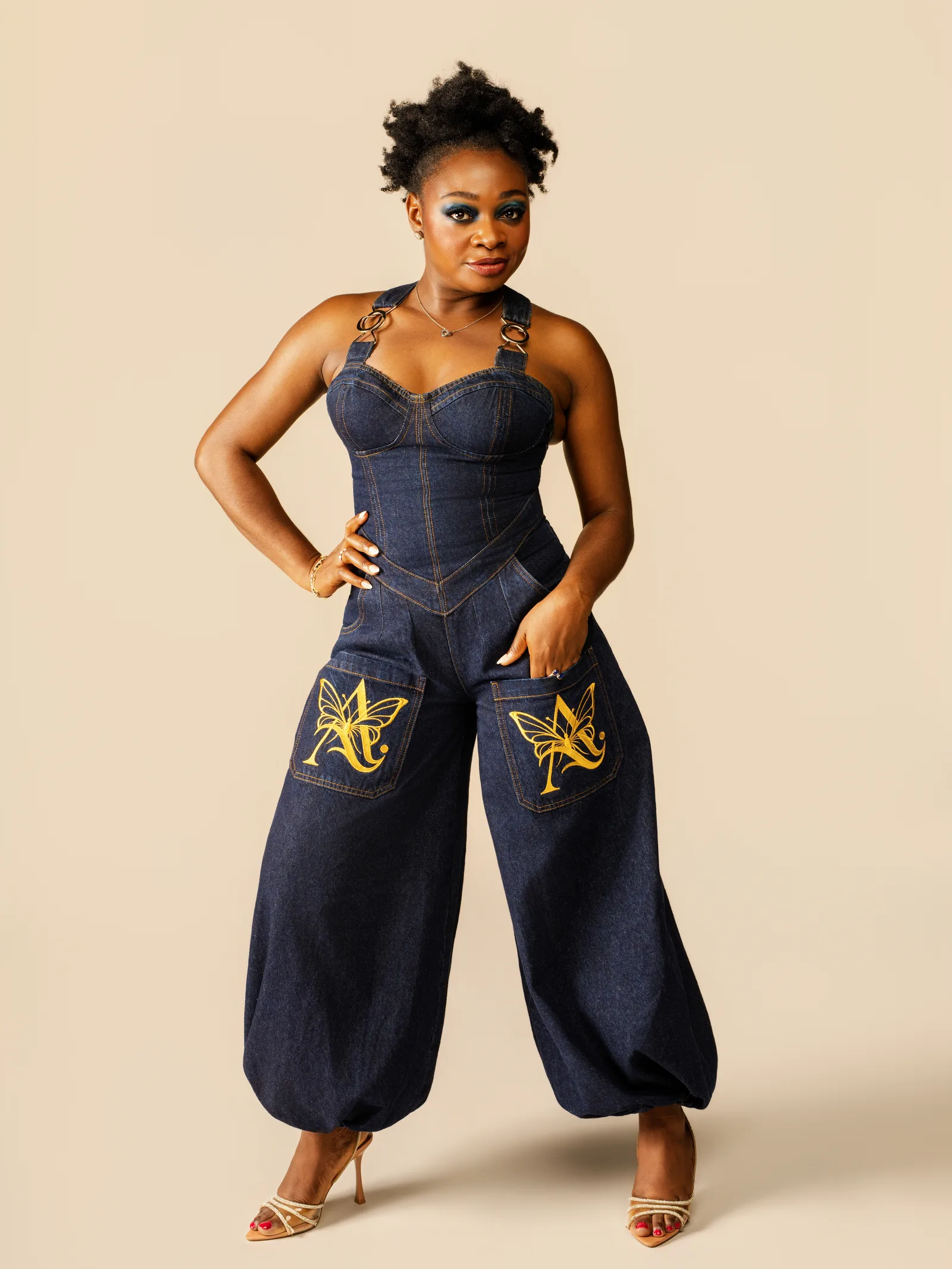
Egoyibo Okoro spent more than a decade practising law, in privacy and data protection across Europe and the Gulf, before designing a first garment. The house grew out of a conviction Akwa calls Origin-Native: the most honest design starts from where a thing actually comes from, and builds forward from there rather than borrowing a story that is not its own.
Egoyibo brings the house its original vision, the building of fashion technology and product, and a steady wish to translate cultural identity into contemporary design. Akwa itself came out of that wish: a platform built so that a design idea does not have to stop at a picture.
The clearest expression of Egoyibo’s hand is Collection 01. The Crisscross Jumpsuit, the Denim Bomber, the Indigo Power Co-ord, the Combat Dungarees and The Origin Hoodie are architectural and wearable at once, and they make their cultural argument through cut and construction rather than print. They were also the house’s first real test. The tech packs went to a manufacturer, the samples came back, and most of the denim ran a size small, a lesson Akwa turned into the way it now derives ease.
Kosy: the experimental eye
Kosy Okoro is Akwa’s Equity Partner, Creative Director and Growth Manager, and a co-founder and designer of Yibo & Kosy. Kosy brings a longstanding love of fine art and design, and an unusually visual approach to form and composition, to a house that began with denim and hoodies.
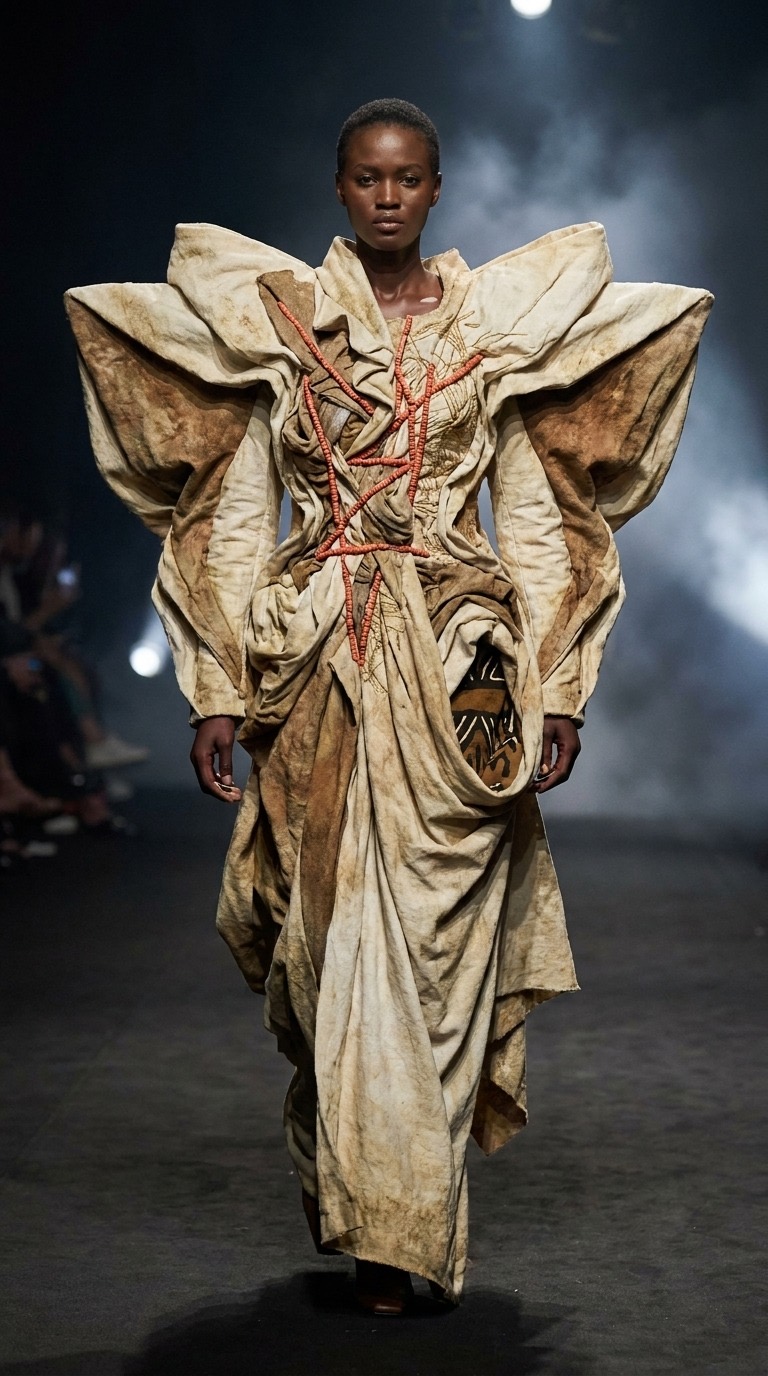
Kosy’s design language frequently leans more experimental, sculptural and runway-ready than Collection 01. Kosy is not a formally trained fashion designer. The first collection Kosy designed on Akwa, in June 2026, was made of first attempts at designing anything at all, produced within hours of getting access to the tools, and it held together with a single recognisable hand: sculptural tailoring, undyed minimalism and heritage-fused drama.
One gown from it carries sculptural sleeves and coral-bead architecture down the bodice. Akwa did not stop at the image. It worked out how an atelier would physically achieve the shape: a boned corselette foundation carrying the bodice, hair canvas and horsehair standing the structure away from the body, sleeve heads built over internal shapers, and a build order that constructs the foundation first. The story of that first collection tells it in full. Those pieces are concepts on the platform, not manufactured garments, and the house has already named its atelier line for Kosy: The Kosy Edit, set aside for limited pieces exploring African craftsmanship, couture technique and runway expression.
Two design languages, one house
The interesting thing about the house is that its two designers do not share one aesthetic, and are not asked to. Collection 01 is architectural and wearable. Kosy’s first concepts are sculptural and theatrical. A house could smooth that difference away. This one is built on it.
The method is simple to describe. One sibling may begin with a concept, a cultural memory, a garment problem or a silhouette. The other challenges it, sharpens it or reinterprets it. The house’s next collection is planned to carry work by both, and every piece in it will be credited to the sibling who designed it, never to the house in general. In Akwa, that credit comes from the designer’s own account rather than from anyone retyping a name, which is how a piece reading “Designed by Kosy Okoro” can sit beside one reading “Designed by Egoyibo Okoro” with both of them true.
How Akwa takes their ideas toward production
The house is also a case study, because every stage of its work runs on the same platform anyone can use.
- From idea to design. A design can begin as a written description, a sketch, a garment built block by block, a hand illustration or an uploaded image. Akwa’s design surfaces turn each of those starting points into a structured design rather than a single picture.
- From design to a maker. A design can carry a Tailor Brief, the document a tailor works from for a first garment, and a Tech Pack, the specification a manufacturer quotes and samples from. The two are different documents for different people, as this guide explains.
- From sample back to the record. When a sample comes back, what the maker corrected is recorded against the garment, so the next pack starts from what was learned instead of from a folder nobody reads. Why that matters more than another PDF.
- Provenance throughout. Material, manufacturing and provenance decisions are recorded through Akwa’s Design Trust technology, so a piece’s history travels with it from design to production.
The two siblings’ work sits at different points on that path, and we keep the two claims separate on purpose. Collection 01 has gone from design to specification, to sample, to correction, and is now on pre-order. Kosy’s first concepts have gone as far as a construction brief. What the platform has demonstrated and what has been proven in physical manufacture are different things, and saying which is which is exactly the honesty Akwa is built to keep.
Yibo & Kosy is two siblings, two design languages and one fashion house, with one platform underneath it. Visit the house, or start a design of your own.